
Posted on

Properties in Southern Arizona Are High-Risk for Bee Activity

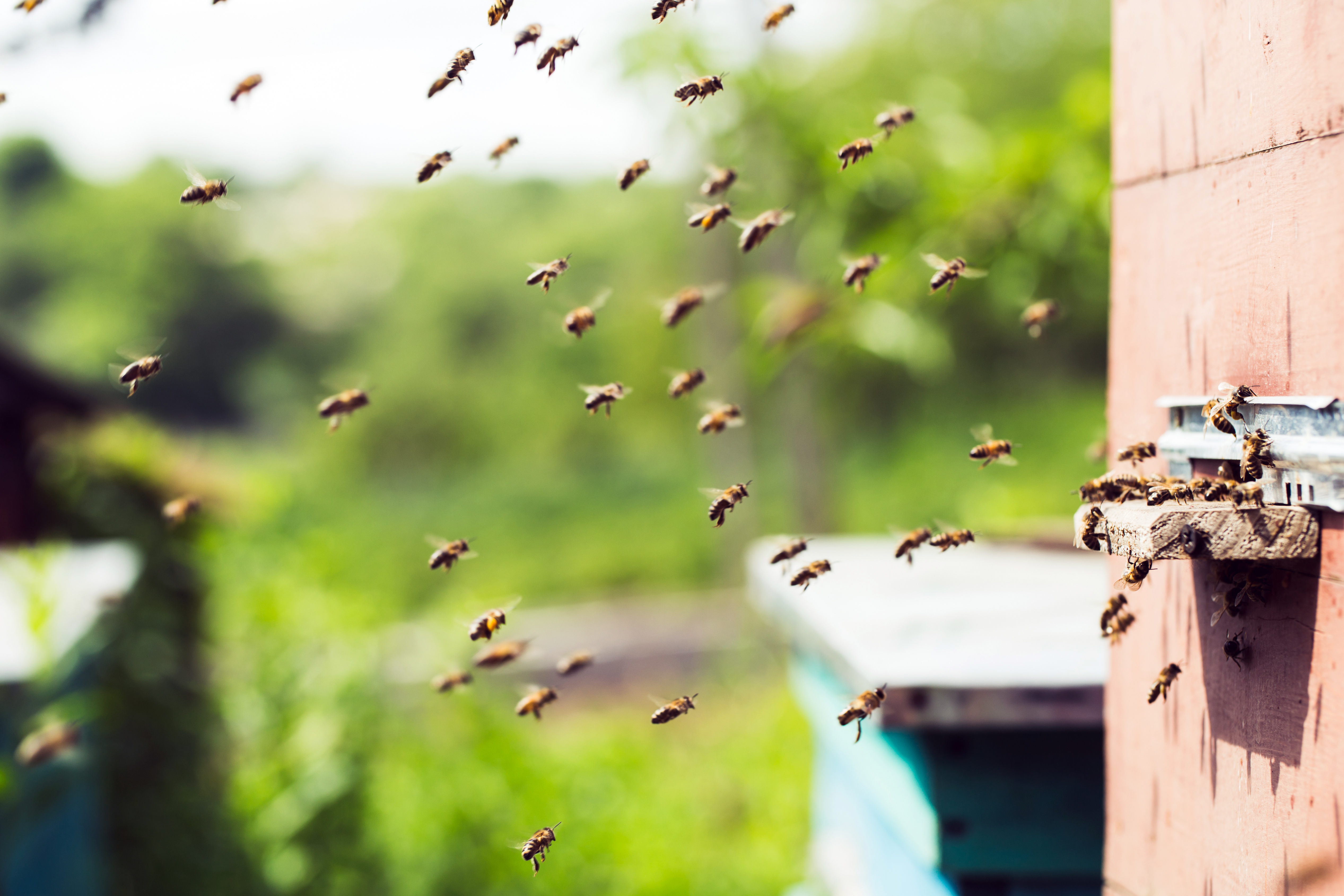
Bee activity in Southern Arizona is common year-round, but large HOA and commercial properties in cities like Phoenix, Scottsdale, Tempe, and Chandler, face unique risks. Expansive landscaping, irrigation infrastructure, utility enclosures, and building spaces create ideal conditions for bee colonies to establish themselves.

Unlike occasional bee sightings, colony establishment can escalate quickly; especially as warmer months approach and swarming activity increases.

Why Bees Choose Large Managed Properties in Arizona

Bees look for protected voids and consistent water sources. On HOA and commercial properties, common attractants include:

  • Irrigation valve boxes and utility enclosures
  • Wall and roofline gaps
  • Dense hedges and shaded common areas
  • Water sources from irrigation overspray or decorative features

Once a scout bee identifies a suitable location, a swarm can establish a colony rapidly. In Arizona’s climate, colonies can grow quickly and become defensive if disturbed.

Common Treatment Approach

  • Property-wide inspection for swarm and hive activity
  • Identification of structural entry points and spaces
  • Safe bee removal and hive extraction when necessary
  • Sealing and exclusion recommendations
  • Ongoing monitoring during peak swarm season

Professional removal is critical, and improper treatment can increase defensive behavior and create safety risks.

Why Proactive Bee Management Matters

Strategic bee control helps:

  • Reduce liability risks on properties
  • Protect residents, tenants, and visitors
  • Prevent structural damage from honeycomb buildup
  • Maintain safe outdoor common areas and amenities


Schedule a Cimex Bee Control Evaluation

If you manage an HOA or commercial property in Southern Arizona, proactive bee inspections can help identify potential colony sites before they become larger issues. Our professional evaluations locate risk areas and provide safe, effective bee management solutions.

Contact us today to schedule a bee control evaluation! (602) 688-4985

Cimex Control Pest Management


Vote for us! https://tinylink.net/tFmr6

Posted on

Late-Winter Yard Pests That Damage Arizona Properties

Late-Winter Yard Pests That Damage Arizona Properties

Late winter is a critical time for pest activity across Southern Arizona. In cities like Phoenix, Scottsdale, Mesa, and Tempe, cooler temperatures push many pests underground or closer to structures, often causing landscape damage that goes unnoticed until spring.

For HOAs and commercial properties, identifying and addressing yard pests early helps prevent costly repairs and larger infestations later in the year.

Common Late-Winter Yard Pests in Arizona

Gophers & Other Burrowing Rodents:

Gophers remain active year-round in Arizona, tunneling through turf and landscaped areas. Their activity can damage irrigation lines, root systems, and landscape features, leading to uneven ground and dead patches in lawns. Other burrowing rodents can create similar issues and increase maintenance costs.

Pack Rats & Ground Squirrels:

These pests often nest near buildings, retaining walls, and storage areas. They can damage wiring, irrigation components, and structures while creating safety and sanitation concerns.


Signs of Underground Pest Activity

  • Fresh mounds or raised soil in landscaped areas


  • Irrigation issues or unexplained water loss


  • Thinning or dying grass and plants


  • Small dark droppings or the smell of urine

Common Treatment Approach

  • Property inspection and pest identification


  • Targeted trapping and control methods


  • Monitoring of active burrow systems


  • Ongoing prevention to reduce reinfestation

Why Late-Winter Pest Control Matters

Addressing yard pests before spring can help:

  • Protect landscaping and irrigation systems


  • Reduce repair and replacement costs
  • Maintain property appearance and safety
  • Prevent small issues from becoming major infestations


Schedule a Cimex Yard Pest Evaluation

If you manage an HOA or commercial property in Arizona, late winter is the ideal time to address underground pest activity. A professional evaluation can identify risks, treat current issues, and protect your property heading into spring.

Contact us today to schedule a pest control evaluation! (602) 688-4985


Cimex Control Pest Management Vote for us! https://tinylink.net/tFmr6

Posted on

CimeX’s Response to COIVD-19

COVID-19 communication to employees

PLEASE READ THIS ENTIRELY

At Cimex Pest Management we are committed to putting our people first. With COVID-19 officially listed as a pandemic by the World Health Organization (WHO), and with so much yet to understand, we wanted to take a moment to let you know the extraordinary and proactive steps we are taking to ensure our team’s safety.

Disclaimer: This document reflects our best knowledge at the time of writing and will be continually updated to incorporate new learnings as they surface.

We have implemented several guidelines that will help us reduce exposure to and transmission of a range of illnesses, including novel coronavirus. See Cimex Pest Management Guidelines below.

During this time, we want to emphasize:

Communication with your manager is very important. Please inform your manager if you need help in any way during these turbulent times.
We want to build increasing readiness and adoption of virtual technologies to better enable remote work. We are currently working to make sure that we have the right infrastructure, knowledge and best practices in place to ensure our success and continuity of operations.
We know that social distancing may also impact us in our personal lives, with the potential for school closures and/or transit reductions. Cimex Pest Management is dedicated to supporting our employees, and we feel that we are in a position to minimize these issues by leaning into virtual work and interaction.

In the guidelines below, you’ll find our latest thinking on how Cimex Pest Management will adapt its practices to ensure that we continue to deliver against our clients’ expectations, while also making decisions in a thoughtful manner that prioritizes the safety of our team. We ask that you also make responsible decisions in your personal life, avoiding concerts, sporting events, non-essential travel and other large public gatherings.

Of course, we will monitor incoming COVID-19 updates from Health Canada and amend and adjust these guidelines at regular intervals as the situation develops. We thank you for your understanding and patience.

Sincerely,
Fernando Torres, Owner, Cimex Pest Management

Cimex Pest Management Guidelines

Communication
We want to highlight the importance of communication if/when you are feeling threatened by the COVID-19 pandemic. Please remain in close contact with your manager.
[If you have specific communication practices you would like your team to follow, insert them here.]

Safety precautions
We are elevating our safety precautions. If you are not feeling well, you MUST work from home. In addition, we expect you to stay home for a minimum of two weeks after all symptoms have dissipated.
[If you have specific safety precautions you would like your team to follow, insert them here.]

We encourage you to follow usual health precautions, such as:

  • washing your hands often
  • social distancing and avoiding interaction with those who are sick
  • refraining from touching your face more than is necessary
  • practicing proper coughing and sneezing etiquette
  • avoiding crowded events; and
  • avoiding non-essential travel

Office visitors
[If you regularly have office visitors (e.g., friends and family, delivery people, third-party vendors, clients, etc.), insert your stance on them here.]

Work travel and local client visits
[If client visits and employee travel is part of your business, insert your stance on it here.]

Posted on

Solving A Rabbit Problem

Rabbits are considered pests for a variety of reasons. A community of rabbits can destroy crops, cause soil erosion and compete with native fauna for food and habitat. Because of their plant nibbling and destructive ways, rabbits prove to be a frustrating pest for gardeners and farmers. Through the use of repellents and other pest control methods, it is possible to remove them from your farm or garden.

Recognizing the signs of rabbits

Rabbits have many natural predators, and this makes them difficult to observe. Some people do see rabbits in broad daylight if they’re in an unthreatening environment. Look out for rabbit droppings and plant damage if you’re unsure of their presence. Rabbit pellets are as small as a pea and they may appear in small piles or spread around.

Make your garden less appealing to rabbits

Rabbits live in areas that provide them with cover and protection from predators. It’s common to find them living in low-growing shrubs, tall grasses, brush piles, underneath sheds, porches and other structures. To deter rabbits, clean up any brush piles and keep tall grasses short by mowing. Also consider blocking access under structures on your property. You can also be careful when it comes to choosing plants for your garden. Plant things rabbits are not likely to eat. You can find a list of these plants here.

What if things get out of control?

Rabbits are known for the speed in which they reproduce. Because of a one month gestation period, rabbits can become a problem quick. If your garden or farm is overrun with rabbits, contact the professionals at CimeX Control for help. We have proven methods to remove small mammals, like rabbits, from your property. At CimeX Control, we tailor our plans to each pest problem, making sure we remove critters the first time. Call us at (602) 688-4985 or send us a message at ftorres@cimexcontrol.com.

Posted on

When Gophers Have Got To Go

Gophers, a variety of burrowing rodent, are common in the western two-thirds of the United States. They’re also referred to as ground squirrels. These little creatures eat up flowers, vegetables and make a general mess out of many homeowners’ lawns. Gophers can also pose a threat to farm or commercial property. Here’s how you know it’s time to serve the gophers on your property an eviction notice.

How to know you have gophers

If your plants remain in a half-eaten state for days, your probably have gophers. They do not make tunnels that are visible, but they do go into feeding frenzies. People sometimes mistake gophers for moles and choose the wrong treatment. Moles are actually keener on eating shrubs and earthworms than gophers usual diet of bulbs, roots, seeds, and vegetables that grow underground.

Another way to determine if a gopher is present is to check for mounds of dirt on the surface of the ground. The mounds are made as a gopher tunnels through the soil in search of food. These moundes are less extensive than mole tunnels but they are typically larger in diameter and tend to be deeper.

What’s the best way to get rid of gophers?

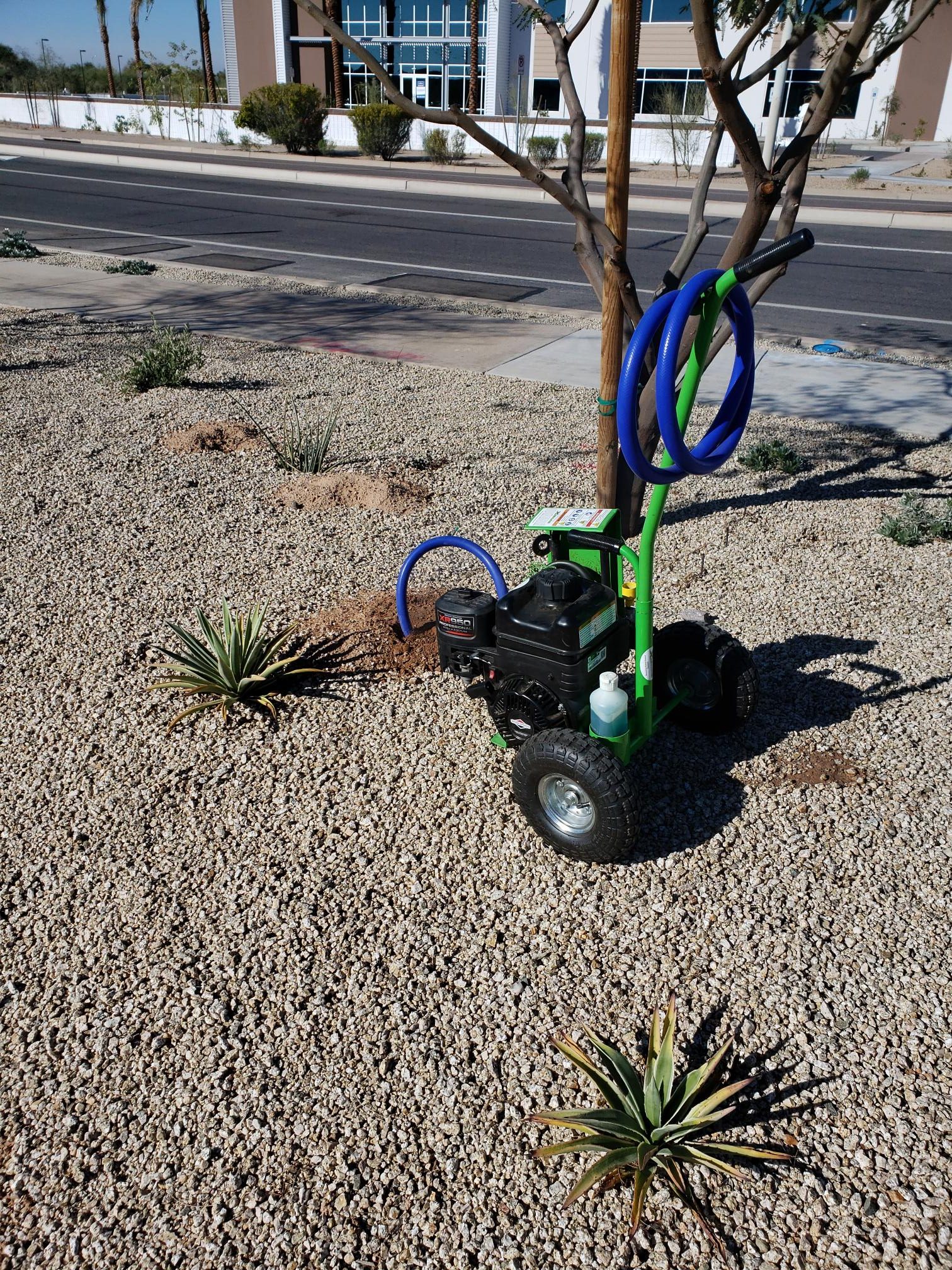
At CimeX Control, we help our pest control clients in the Phoenix area get rid of gophers with the Burrow X. This smokes the gophers while their in the tunnel. Some gopher problems call for different solutions, but we always find a way.

Contact CimeX Control for a free inspection. We build relationships with our clients so they feel free to communicate with us about their unique challenges. We also tailor our plans to each pest problem, making sure we remove critters the first time. Call us at (602) 688-4985 or send us a message at ftorres@cimexcontrol.com.

Posted on

COVID-19 Notice To Clients

In response to the recent outbreak of the coronavirus, we wanted to share the extra measures we have made internally to minimize any risk to customers and employees. The health and safety of our customers is our top priority, not only during these concerning times with the spread of COVID-19, but always. Our team is prepared to continue business as usual while taking precautionary measures to ensure we can navigate situations safely.

We have implemented the following:

  • We will double our hand sanitation process before and after each service.
  • We will wear gloves for the duration of all services.
  • To comply with social distancing and inform our customers when we arrive for service, we will knock on doors and take 6-8 steps back.
  • As a reminder, on regular visits we only need to treat the exterior of the home to help prevent pests from entering. We will, however, treat the interior upon request and wear a face mask/respirator for any inside services provided.

We sincerely hope that you and your family are safe during this time. If there is anything we can do to help please don’t hesitate to reach out via text, email or phone.

Read what Governor Ducey clarified as essential services here: https://azgovernor.gov/governor/news/2020/03/governor-ducey-issues-executive-order-detailing-essential-services

Posted on

Now Hiring: Pest Control Technician

CimeX Control Pest Management is a fast paced, rapidly growing and award winning, local pest control company offering valley businesses and residents safe & reliable pest control solutions, including termites, bed bugs, scorpions, and all common pests.  Our team uses advanced technology to document pest findings and activity, best pest management practices to apply pesticides in a safe and effective manner and excellent communication skills to communicate with clients. 


Our team believes in the power of relationships. We believe that the relationships with our customers are key; we place an emphasis on service, avoid pushy sales tactics, and spend time connecting with our customers. We believe that having great relationships between team members is essential; We believe that relationships with family and friends are a priority; we keep evening work to a minimum, have very little weekend work, and include families in events.

Pest Control Technician Identify potential and actual pest problems, conduct inspections, meet with clients to explain pest issues.  Design control strategies, while managing day to day managerial tasks. Identify opportunities to sell services to new accounts, (Residential, Commercial, Apartment, HOA, and Industrial).  Provide Pest Control solutions to current clients outside the approved scope and sell the services. Time management a must.

PEST CONTROL TECHNICIAN RESPONSIBILITY:

  • Spray, bait, and trap to control pests in and around properties.
  • Control roaches, ants, scorpions, and any general pests, using industry approved chemical treatments.
  • Inspect for Rodents, Termites, and any wildlife outside the normal scope.
  • Receive work orders and work requests, determine nature of the problem and undertake necessary actions, such as inspecting property, determining issues and implementing the most effective solution.
  • Ensure safety of all clients and workers while performing duties.
  • Communicate with clients on what is being done, (timeline and treatment) and what they can do to help, (keep pets indoors, move plants, etc.)
  • Operate spraying equipment, bait gun, and various power and hand tools in performance of duties.
  • Keep vehicles washed, cleaned, equipped, and maintained to company standards.
  • Maintains records and files and prepares reports on activities.
  • Maintain knowledge of applicable laws, rules and regulations governing pesticide application.
  • Maintain all MSDS Sheets.
  • Maintain required CEU’s for License (Educational events) – All technicians are required to attend industry seminars throughout the year to keep updated on current trends and product usage
  • Time Management – Schedule appointments in a geographical manner using company software to maximize efficiency and productivity.
  • Inspect all CimeX Control Equipment daily to ensure it is kept clean, safe, and operational. 

KNOWLEDGE, SKILLS, AND ABILITIES: While experience is a plus, it is not mandatory.  We will provide full training if hired without experience.


  • Thorough knowledge of the common practices, tools and terminology used to control pests
  • Thorough knowledge of the use and characteristics of pesticides
  • Thorough knowledge of the hazards and safety precautions associated with the work
  • Ability to work from sketches, drawings, plans or specifications
  • Ability to follow oral and written instructions
  • Ability to apply pesticides chemicals in accordance with established regulations and to read, understand and follow chemical label instructions
  • Ability to perform mathematical calculations to estimate materials and time needed to complete task
  • Ability to establish and maintain effective working relationships and communicate with a diverse population
  • Skilled in the use of tools and equipment necessary to perform tasks

PHYSICAL REQUIREMENTS: Standing, walking, climbing, carrying equipment, bending, kneeling, crawling, reaching, handling, pushing, and pulling. Ability to lift 50 lbs.
Reasonable accommodations can be made to enable individuals with disabilities to perform the essential tasks.

STANDARD REQUIREMENTS:

Must be in possession of a

  • Valid AZ driver’s license, with a good driving record for at least 5 years
  • All technicians must become State Certified in pest control and/or termites by the Arizona State Pest Control Commission within 90 days of employment
  • All team members are subject to a drug test, and they must not have a criminal record (felony or DUI convictions).

BENEFITS INCLUDE:

  • Paid Training
  • Medical and Dental benefits
  • Paid Vacation and PST
  • Paid Holiday’s
  • All equipment provided
Posted on

Safely Removing Wasp Nests

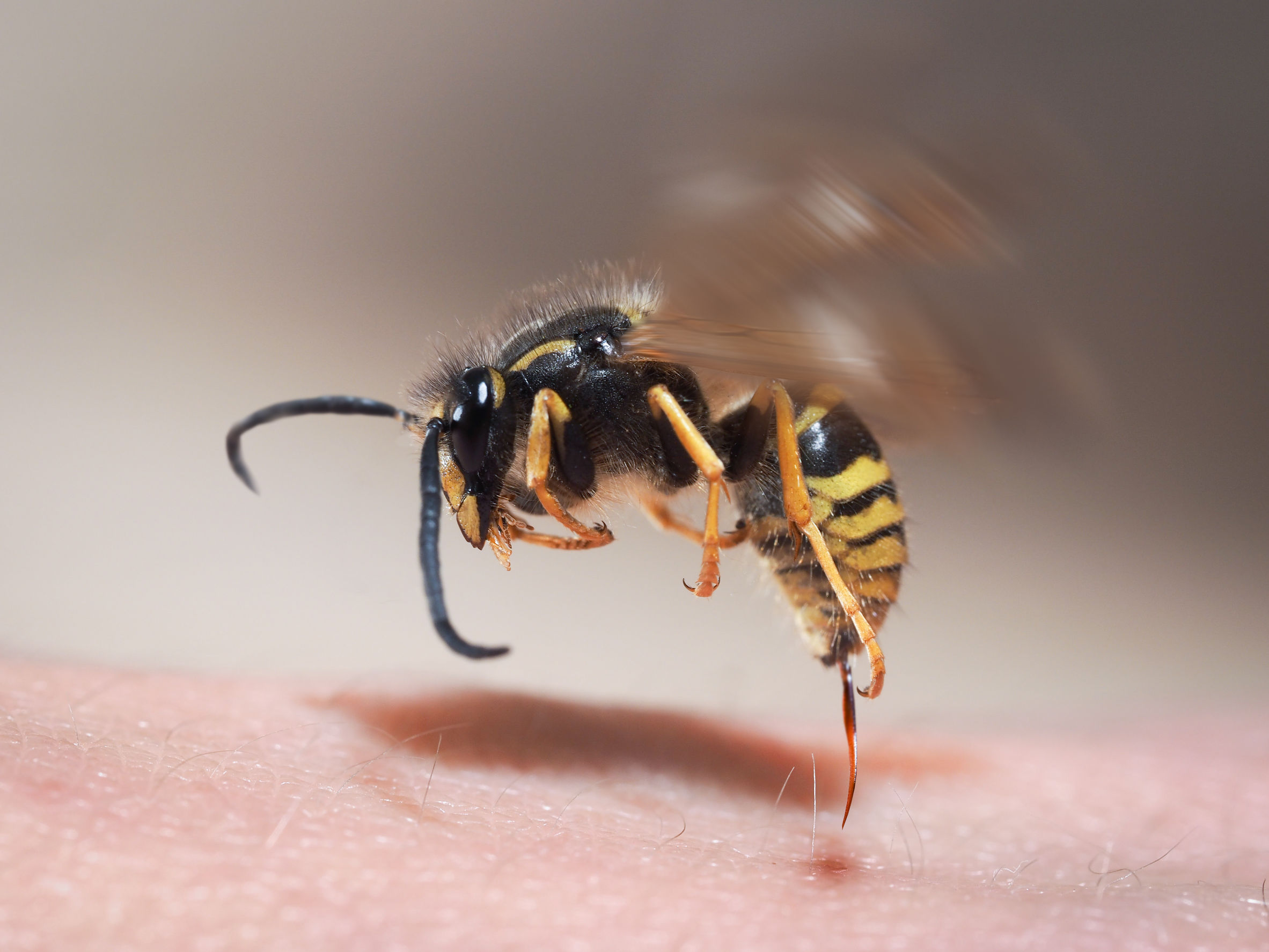
Some varieties of wasps build nests under porches and around homes. As wasp stings can be painful and sometimes dangerous, this is not where you want to find them. This is especially important if you have kids or if someone in your home has an allergy to wasp stings. Here’s how to safely get rid of a wasp nest if you find one near your home.

Identifying a wasp nest

If there is a nest under your porch, you are likely dealing with a paper wasp. Some wasp nests are similar to bees, which require different removal techniques. It’s important to be certain the nest you’re removing is a wasp nest. How do you identify a paper wasp nest? The nests are round, umbrella-shaped cones attached by a stalk to a surface. Wasp choose to hand their nests in many places, including: tree branches, porch ceilings, attics, window corners, and the inside of grills or hose reels. A pest control professional can help you identify the nest if you are unsure.

How to remove the wasp nest

The queen is key to the survival of the wasp colony. If you try to spray, knock down or dismantle the nest, the wasps will sense an attack and protect their queen. The only defense a wasp has is its stings. When removing a nest on your own, you are placing yourself in the path of dozens of wasps. Since each wasp can sting multiple times, you are placing yourself in danger. This is why our pest control professionals recommend you do not try to remove a wasp nest on your own.

A pest control professional can help you determine the type of nest on your property and safely remove the nest. Need help removing a hive? Call us at (602) 688-4985 or send us a message at ftorres@cimexcontrol.com.

Posted on

All About Bees: The Harmful And Harmless

Bees are an important part of the ecosystem, but they can also be harmful. Some varieties are cute, while others are frightening. A bee sting may be a serious risk to someone’s health and not a big deal to another person. There’s no debating it – bees are a peculiar type of insect. Here’s a few interesting facts about bees and bee removal.

What type of bees can sting me?

While there are many types of bees, but some of the most common in the United States are the honey bee, carpenter bee, and the bumble bee. All of these bees can sting you, but a single sting won’t seriously harm most people unless they are allergic.

Queen and worker bumble bees can sting, and because their stingers lack barbs, the bees can sting repeatedly without hurting themselves. These bees are not usually aggressive, but they may attack in defense of their hive. Honey bees have a barbed stinger that gets stuck in the flesh, and because of this they die after they sting someone. Female carpenter bees have stingers that can be quite painful, but they are not aggressive and rarely sting anyone.

Are bees aggressive?

Bees do not inherently want to hurt people. Most of them behave aggressively to defend their nest or hive. This is why it’s so important to have professionals remove beehives. Pest control professionals have the tools needed to do so safely.

Carpenter bees, which often live in fences, appear to be aggressive, though they rarely sting people. They will hover around the entrance to their hive in an effort to scare away potential threats. Carpenter bees are also known to dive-bomb threats by swooping down and acting aggressive.

Which bees pollinate flowers?

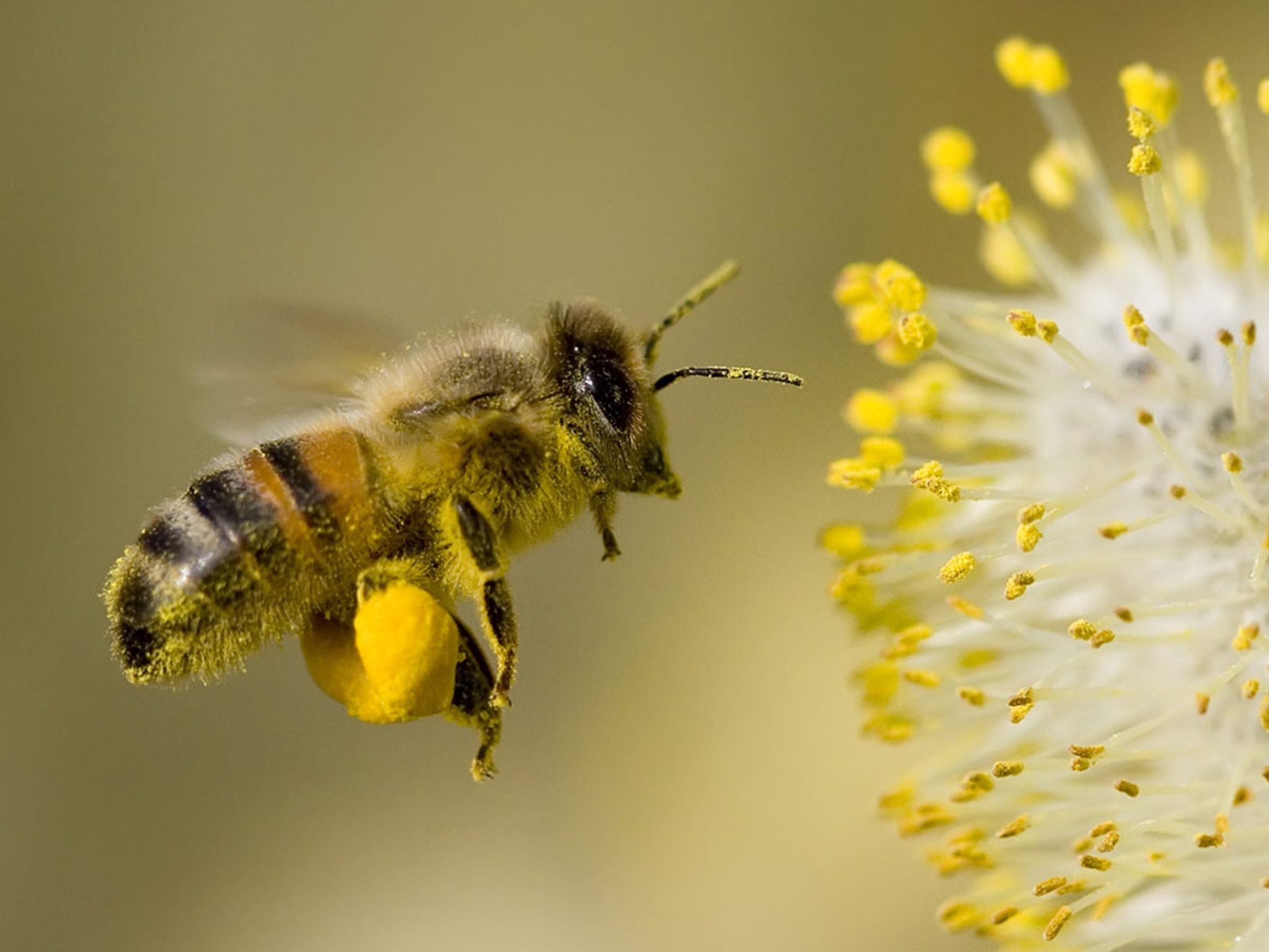
Many species of bees pollinate flowers, but you have most likely seen a bumble bee flying around your garden, hanging out in the flowers during the warmer months. These master pollinators are black and yellow, larger bees that obsessively seek out flowers in search of pollen and nectar. Other than the honey bee, they are likely the second biggest pollinators and are very important to the planet’s overall ecosystem.

Many people think the bumble bee’s large size and furry body makes them the cutest type of bee. We’d have to agree! Whether you are a fan of bees or not, it’s best to make sure any hives are far away from your home. You could accidentally disturb a hive and have a real problem on your hands. Need help removing a hive? Call us at (602) 688-4985 or send us a message at ftorres@cimexcontrol.com.

Posted on

Signs of rat infestations

Rats stay away from humans if possible. These rodents are secretive. Unless you have a high population in your home, you may not see the rat itself. You have to look for signs elsewhere. Signs of rat infestation include rat droppings, dirt, and grease marks on floorboards and walls.

Mice vs. Rat – Who Causes More Damage?

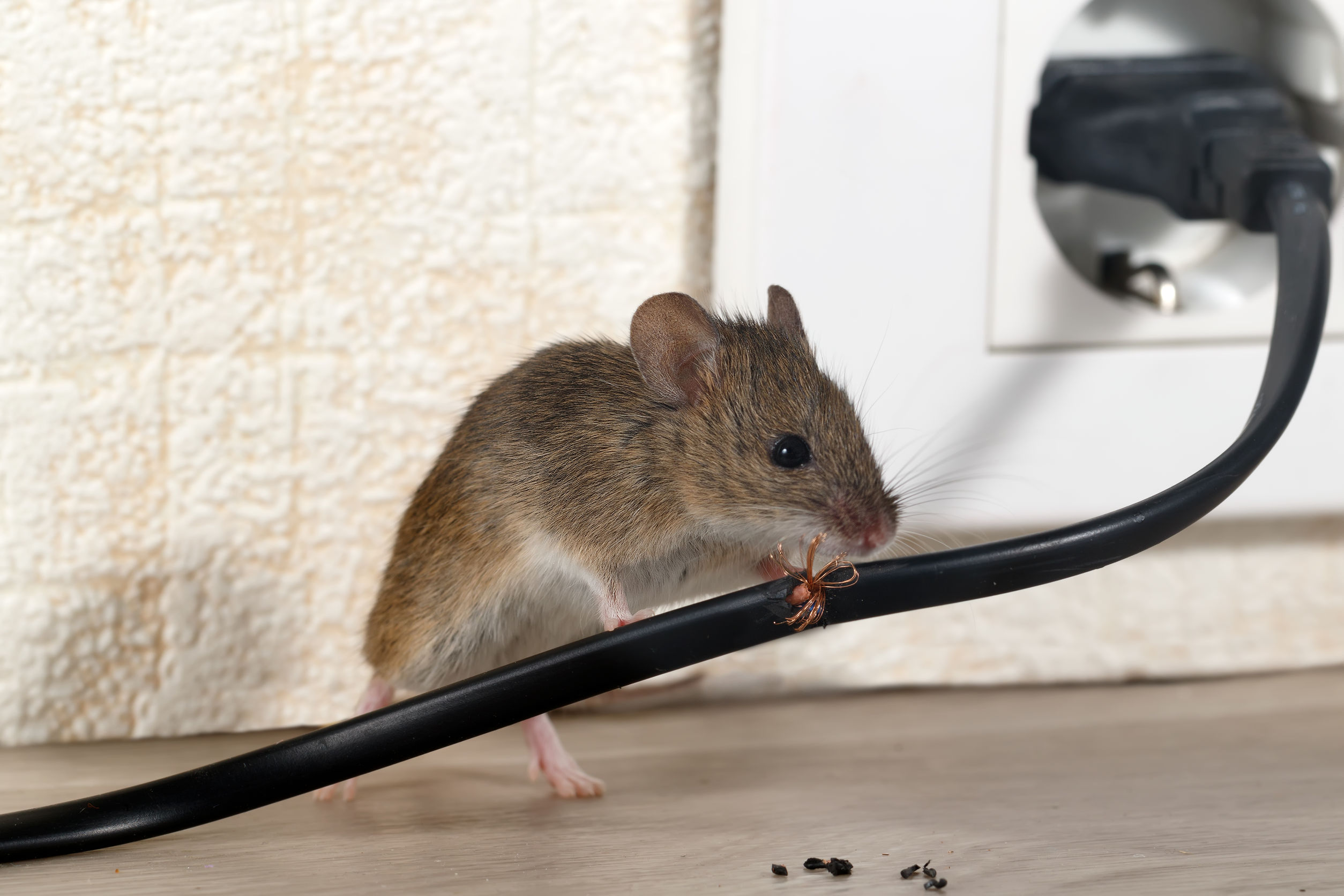
If you have mice or rats in your home, the damage can be significant. You should have a professional pest control specialist address the situation before you face costly damage. Both rodents can gnaw on various structures and wires in your home. This can cause fire hazards. Mice have smaller, weaker teeth than rats, which means mice can not break through the food containers a rat could. Rats have been known to gnaw through building materials such as aluminum, wood, glass, sheet metal and cinder blocks.

Rats and health hazards

Rats can transmit harmful diseases if they bite or scratch a human or a human comes into contact with droppings or urine around the home. Rats have been known to contaminate food and run across counter tops where food is later prepared. This can lead to contamination and disease. Rats carry: Lymphocytic choriomeningitis, Black Plague, Salmonellosis and more.

Getting rid of rats

To avoid disease and structural damage of your home, take steps to remove rats from the home as soon as you can. Consult a pest control professional for help. If you believe you have a rat infestation, contact us for a free inspection. Most homeowners prefer not to deal with rats up close, so we take care of the problem. We also tailor our plans to each pest problem, making sure we remove critters the first time. Call us at (602) 688-4985 or send us a message at ftorres@cimexcontrol.com.

Posted on

Removing Mice From The Home

Prevention is always best in pest control. Because mice can cause so much damage, we want to give you a few ways to reduce the likeliness of mice entering your home in the first place. If you’re one of the brave souls willing to face mice on your own, here’s a few things you need to know to get rid of mice.

Eliminate points of entry

Rodent-proofing your home is an effective way to stop a mice infestation from expanding or occurring in the first place. Eliminating points of entry will help you defend your home or business. This is difficult, as mice can squeeze into even the smallest of openings. If you can fit a pencil into a hold, crack or other opening, a mouse can squeeze through it.

Seal cracks in the wall or foundation of your home, especially where utility pipes and vents occur. You can use steel wool or caulking. Avoid using sealants like rubber, plastic, wood or other materials. Mice can easily gnaw through them. Use weather stripping for door and window gaps.

Use mouse traps

If you have an existing infestation, you will need to use some sort of mouse trap. Classic, wooden snap traps will do the trick for moderate mouse populations. It may be necessary to lay several traps to catch just one mouse.Try laying different types of traps, like bait traps or multiple-capture live traps. This practice will give you a better chance of catching several mice.

Keep your place clean

While good sanitation won’t get rid of a mice problem, poor sanitation can attract one. Mice can survive on 3 to 4 grams of food a day. A few crumbs here and there can sustain a moderate population of mice. To keep mice at bay, vacuum your floors and wipe down counters, eliminating food residue. Mice have sharp teeth, so they can chew through almost anything. Plastic bags are no match for mice. Store food in air-tight containers to reduce the likelihood of mice getting inside.

If your pest situation becomes serious, which often happens with mice, you can contact us for a free inspection. Most homeowners prefer not to deal with mice up close, so we take care of the problem for them. We also tailor our plans to each pest problem, making sure we remove critters the first time. Call us at (602) 688-4985 or send us a message at ftorres@cimexcontrol.com.

Posted on

Dealing With Spiders In The Home

Most spiders enjoy living outdoors, but some find their way inside in search of food and shelter. The easiest way to get rid of spiders is to prevent their entrance in the first place. By taking a few simple steps, you can prevent a serious spider infestation. Here’s a few ways to prevent and deal with spiders in the home.

Ways to deter spiders from the perimeter of your home

The best way to prevent infestation is to seal up your home. Patch cracks and holes leading from the outside in to prevent spiders from sneaking inside your home. Use caulk to fill in gaps of space in closed windows and doors. Fix torn window screens, as spiders can fit through even the smallest of holes.

You should also remove vegetation from the perimeter of your home. If you have a significant problem with spiders, you may need to transplant shrubs, ivy, trees and other plants near your home to the opposite side of the yard. Spiders are attracted to vegetation as it provides ample hiding spots When they need to find warmth or food, they crawl out of vegetation and head toward your home.

Peppermint oil spray

Spiders cannot tolerate peppermint oil. They hate the smell and will run in the opposite direction when they detect it! You can create a simple spray by mixing in 15 to 20 drops of peppermint oil with water in a bottle. Apply the spray to possible entrances spiders might use to come inside your home.

Pest control methods

One of the best ways to reduce the amount of spiders in your home is to vacuum up egg sacs and webs as you find them. This method may not work if you have a large amount of spiders in your home, but it will help get rid of a few. If you have a serious spider infestation, call a professional exterminator for help.

Contact our professionals at CimeX pest control for help. We perform free inspections upon request. We also tailor our plans to each pest problem, making sure we remove critters the first time. Call us at (602) 688-4985 or send us a message at ftorres@cimexcontrol.com.

Posted on

How To Tackle A Silverfish Infestation

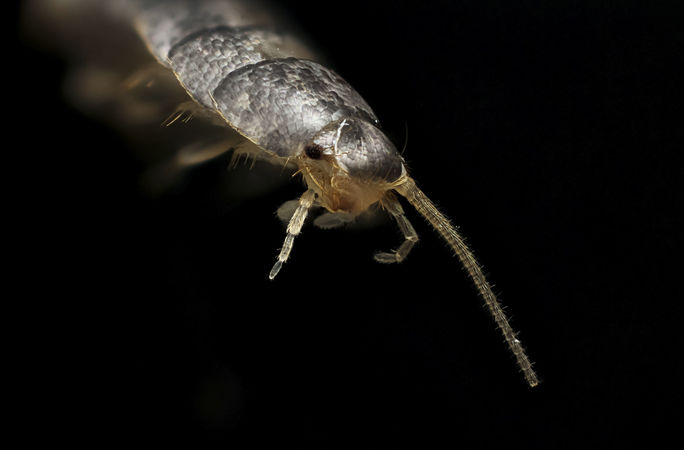
Silverfish are pretty harmless to humans and pets, but they are not a pleasant houseguest. These silvery creatures love to stay in cold, damp places like basements or underneath bathroom sinks. If you have spotted one of these bugs lurking in your house, or know that you have an infestation, we have a few tips preventative tips you can use to keep these insects away from your home.

Why are silverfish in your home?

Silverfish, like most pests, invade homes because there is an abundance of food and lack of predators. Homes also have plenty of dark, damp hiding places for them to nest. All of these benefits combined make for a silverfish paradise. If you have a basement, you are more likely to have a silverfish infestation at some point.

Preventative steps

There are various methods of removing silverfish, but you should use a mix of preventative steps and extermination methods. If you have an area of concern, and think silverfish may be nearby, spread cedar shavings around the area. They do not like the smell and will avoid those areas. Silverfish, like many insects, also cannot stand the odor of lemon and lavender. Buy either oil, dilute in a bottle of water and spray the mixture in areas likely to attract silverfish. These areas may include sinks, cupboards and the edges of rooms.

To keep silverfish from making home inside your living space, decrease the humidity in your home. Silverfish love to stay in moist, humid places. Use a dehumidifier, close your shower curtain so it can dry out and fix leaky pipes. Also be sure to store food properly. Store foods like cereal, pasta, sugar and pet food in airtight containers.
Squashing silverfish infestations

If you have spotted silverfish slithering around your home, we can help you remove them. Contact our professionals at CimeX pest control for help. We perform free inspections upon request. We also tailor our plans to each pest problem, making sure we remove critters the first time. Call us at (602) 688-4985 or send us a message at ftorres@cimexcontrol.com.

Posted on

How To Spot And Deal With Termites

Termites are a constant threat. They are active during every season. It is important to have a pet control plan ready to implement at the first sign of termite infestation. So why are termites so destructive and how can you spot them before they cause serious damage? The following will help you understand termite infestations and how to take care of the problem before they take over your home, apartment, or office.

What are termites?

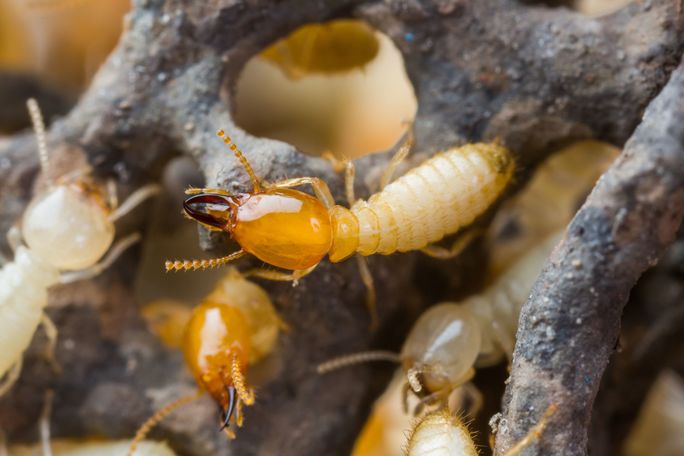
Termites are insects that feed on cellulose, which means every home or building can play host to this silent killer. Termites can take over plant or wood materials with no sign that they are there. The insect is designed to tear through cellulose materials, but they can feed on a book as easily as they can feed on the structure of your walls.

Common signs of termite infestation

The most common sign of termite infestation is small, winged insects trying to escape the home. It is also common to see a cabinet infestation of termites hovering around the colony site. These signs often occur during early Spring.

If you have paint that has bubbled or cracked, that could be because of termites feeding off the interior of your home or office. As they approach the surface, the paint or coating on the surface will bubble. Another sign is solid wood becoming hollow. Termites leave the outer structure of wood, or cellulose, intact. They carve out the interior until it becomes hollow. You can test wood by tapping on it. If the wood is hollow, the tapping will leave an echo as the sound vibrates.

Ridding your home of termites

As mentioned above, you should deal with a termite infestation as soon as you suspect it. Since termite infestations can cause extensive damage, it is best to have a professional exterminate the infestation. Call CimeX pest control for help. We perform free inspections upon request. We also tailor our plans to each pest problem, making sure we remove critters the first time. Call us at (602) 688-4985 or send us a message at ftorres@cimexcontrol.com

Posted on

How To Control Scorpions

There are nearly 2,000 species of scorpions across the globe. In the U.S., they are most common in the South and Southwest. In California and Arizona, you can find more than 45 species of scorpions. With these pests being so popular in our area, it’s important to inform yourself so you can stay safe and your home can stay scorpion free. Here’s what you need to know about scorpions and how to control them.

Are scorpions poisonous?

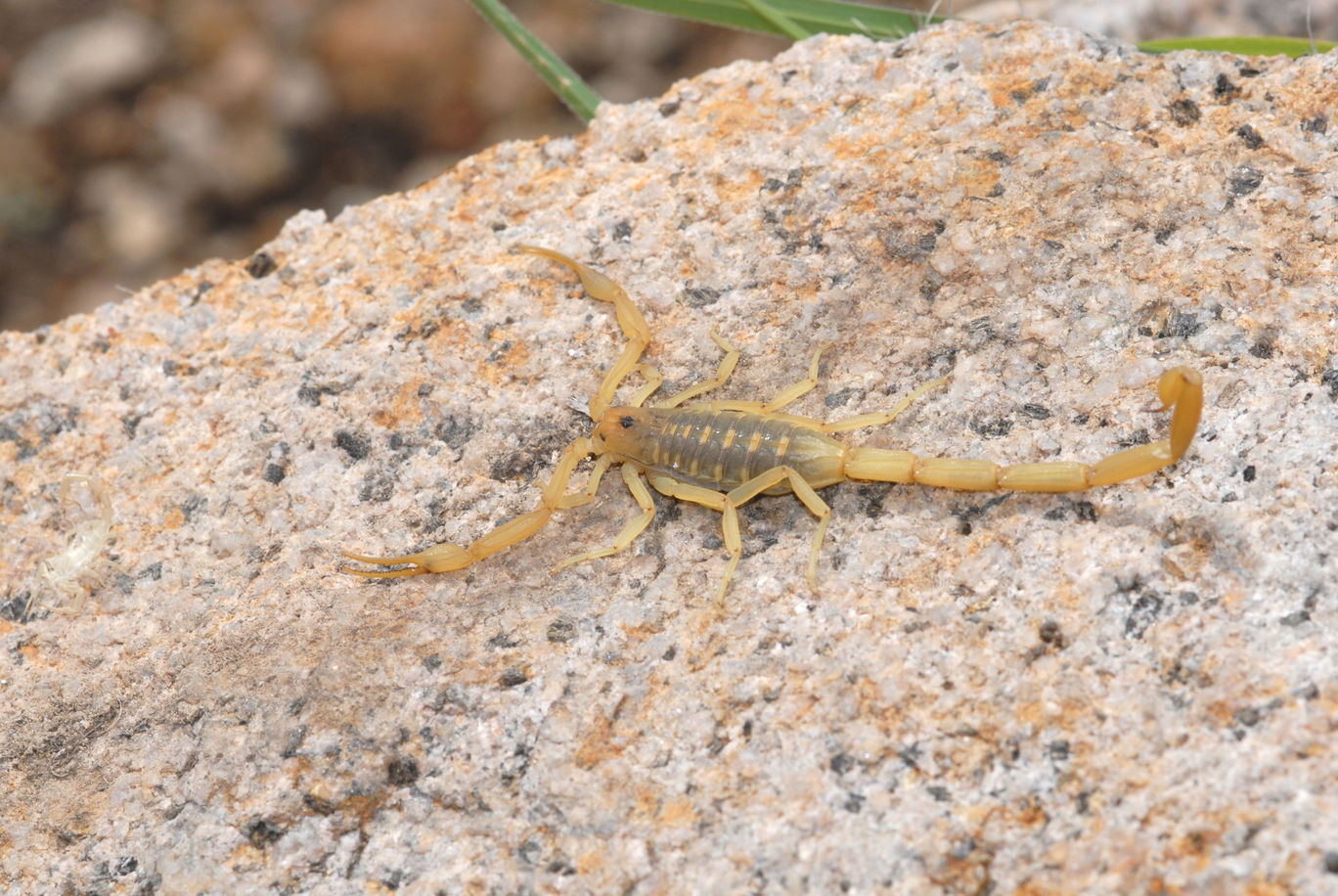
While all scorpions are venomous, only a few are considered poisonous to humans. Scorpions use their venom to paralyze/kill their prey and to defend themselves. There are two species in the U.S. that are considered dangerous: the Stripebacked scorpion and the Arizona bark scorpion.

The stripebacked scorpion is small and varies in color. They are commonly found in the south-central U.S. as far east as Tennessee and as far north as Illinois. The sting of a stripebacked can be painful and dangerous. The Arizona bark scorpion is 1.5 inches long and a golden-yellow or light brown color with a slender tail and pincers. This scorpion has a painful sting that can be potentially lethal, especially in the case of children or the elderly.

Methods of control

There are scorpion-control products on the market that can be administered by a pest control professional. These products can help protect your home, yard or business from potentially dangerous scorpions.

For those who live in areas with a high amount of scorpions, take some precautionary steps. Seal all cracks in your home’s foundation or siding to keep them from entering the house. Make sure your windows and screens do not have holes in them. Rid your home of other pests that could be a source of food.

Help with Arizona Scorpion control

Contact Us for a free inspection. We build relationships with our clients so they feel free to communicate with us about their unique challenges. We also tailor our plans to each pest problem, making sure we remove critters the first time. Call us at (602) 688-4985 or send us a message at ftorres@cimexcontrol.com.

Posted on

Bee Swarm vs. Bee Hive: How To Tell The Difference

Can you tell the difference between a bee swarm and a bee hive?  If not, don’t worry, most people can’t.  Before I worked in Pest Control, I did not know either. So why is it important to know the difference? One big reason is that it is much less expensive to remove a swarm than a hive.

So how can you tell one from the other? They can sometimes look quite similar.  A swarm is a conglomeration of bees who, when they land, all huddle around the queen to protect her. They will typically look like a deflated football or pineapple. A swarm has no hive, honeycomb, or wax. because they have not had time to build one yet.

You see, whenever an established hive becomes overcrowded, the monarch queen will assign the hive to a new queen. In order to free up resources, the Monarch Queen will take flight with about a third of the colony…. hence a new swarm is created. The new swarm will take flight in search of a new place to build a hive. Sometimes they may land and rest for a while. Other times they will land and start building a hive. It usually takes at least a couple of weeks before a swarm can create a fully established hive.

1. A swarm is smaller and appears like a dark ball of bees and has only been therefore less than a week or two.
2. A Hive is usually larger and white or yellow honeycomb may be visible under the bees.
3. A swarm is usually less aggressive than a hive. Bees tend to defend their home once it is established.
4. A swarm tends to be more of an oblong shape. A hive is usually more round.

Posted on

How To Tackle A Pigeon Problem

Pigeons can become a problem for homeowners, apartment dwellers and business owners alike. Their droppings can wreak havoc on paint, balconies and parking lots. Their feces can attract mice and they are highly acidic, staining and eating away at the underlying surface. Pigeon feces can also eat away at your car’s paint, causing serious and costly damage. If you are curious about methods to reduce the amount of pigeons on your property, the following will help you understand how we deter pigeons.

Beyond property damage

As noted above, pigeons can cause thousands in damage to cars and buildings. What you may not know is that pigeons can pose a health threat to people as well. Pigeons carry roughly 60-transmittable diseases. If pigeons take residence in a building or structure, the dry feces they leave behind can be pulled into ventilation systems and inhaled by those working in the building. Inhaling pigeon waste can cause serious illness.

Humane bird deterrents

A number of humane bird deterrents can be used to reduce the amount of pigeons on your property. At CimeX Control, we use certain products to keep pigeons away from your customers, cars and heavily-trafficked areas. We can do this a few different ways. One is habitat modification. This is accomplished through the instillation of pigeon spikes or bird netting to block the birds from getting back to the area they have used to roost, nest or perch. By making these areas inaccessible, birds are forced to move on to a new location. Pigeon spikes can be used on ledges, signs, beams, rooflines and windowsills.

Another way to deter pigeons is to use scare tactics. If you appeal to the senses, such as sight and sound, you can scare the birds away from your home or business. We can accomplish this through the Solar Bird Chase Sonic or Reflective Bird Diverters.

Consult a professional for help

If you don’t have the resources, time or expertise to solve the problem on your own, contact the professionals at CimeX Pest Control. Contact us for a free inspection. We build relationships with our clients so they feel free to communicate with us about their unique challenges. We also tailor our plans to each pest problem, making sure we remove critters the first time. Call us at (602) 688-4985 or send us a message at ftorres@cimexcontrol.com.

Posted on

When Gophers Have Got To Go

Gophers, a variety of burrowing rodent, are common in the western two-thirds of the United States. They’re also referred to as ground squirrels. These little creatures eat up flowers, vegetables and make a general mess out of many homeowners’ lawns. Gophers can also pose a threat to farm or commercial property. Here’s how you know it’s time to serve the gophers on your property an eviction notice.

How to know you have gophers

If your plants remain in a half-eaten state for days, your probably have gophers. They do not make tunnels that are visible, but they do go into feeding frenzies. People sometimes mistake gophers for moles and choose the wrong treatment. Moles are actually keener on eating shrubs and earthworms than the gophers usual diet of bulbs, roots, seeds, and vegetables that grow underground.

Another way to determine if a gopher is present is to check for mounds of dirt on the surface of the ground. The mounds are made as a gopher tunnels through the soil in search of food. These mounds are less extensive than mole tunnels but they are typically larger in diameter and tend to be deeper.

What’s the best way to get rid of gophers?

At CimeX Control, we help our pest control clients in the Phoenix area get rid of gophers with the Burrow X. This smokes the gophers while their in the tunnel. Some gopher problems call for different solutions, but we always find a way.

Contact CimeX Control for a free inspection. We build relationships with our clients so they feel free to communicate with us about their unique challenges. We also tailor our plans to each pest problem, making sure we remove critters the first time. Call us at (602) 688-4985 or send us a message at ftorres@cimexcontrol.com.

Posted on

CimeX Control Rated #1 For Pest Control In Arizona

We’re proud to announce we were rated #1 in the Pest Control category for the 2019 edition of Ranking Arizona! For 22 years, the publication has been referenced every day by company officials to help them make decisions for their businesses and families. We are happy to have a place next to so many fantastic business leaders in Arizona.


Ranking Arizona®: The Best of Arizona Business is the result of the largest business opinion poll taken in Arizona. Results are based purely on voters opinions. It is not based on annual revenue or the number of employees. Participants give their recommendations based on quality of products, services and with whom they would recommend doing business. 


Thank you to our customers for making your voices heard and recommending CimeX Control. We appreciate all of you!


-CimeX Control

Posted on

Lovebugs are more than just a feeling

February is the month of love. With Valentine’s Day fast approaching, we thought it would be interesting to take a look at one little known insect in the southwestern United States: the lovebug. This march fly is a nuisance to those living along the Gulf Coast and the southeastern region of the United States. For those of us in the southwest, these insects are less of a bother. Continue reading to find out where these fascinating insects got their reputation for love.


Lovebug mating habits


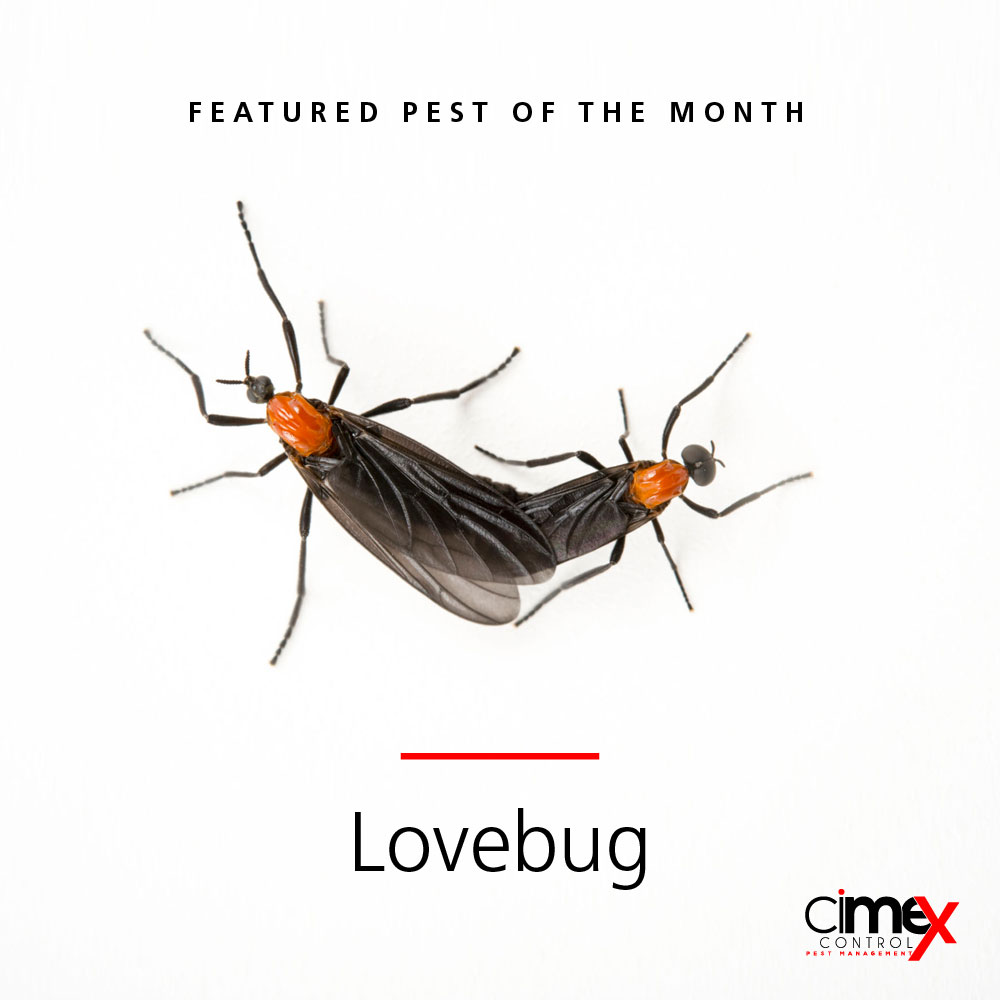
The lovebug, or Plecia nearctica, is a march fly commonly seen in Florida and other states along or near the Gulf Coast. You may be wondering about their nickname. The name lovebug is thought to come from their fascinating mating habits. Lovebugs can often be seen flying around in pairs. This is actually part of their mating process.
The process takes hours and takes place primarily in summer. During their romantic rendezvous, the male attaches to the female and stays connected during flight. The process can take up to 12 hours. Female lovebugs die less than four days after they laying between 100 and 350 eggs.


Damage from lovebug swarms


Lovebugs don’t bite or sting, but they can be destructive to your car. After driving through a swarm of lovebugs, their acidic remains can damage car paint and clog car radiators if left there. A healthy coat of wax can protect your vehicle, but those living in the southwest U.S. will probably never encounter enough lovebugs to cause serious damage.


While lovebugs may not be bothering you anytime soon, our pest control services can help you tackle other infestations. Contact CimeX Control for a free inspection. We build relationships with our clients so they feel free to communicate with us about their unique challenges. We also tailor our plans to each pest problem, making sure we remove critters the first time. Call us at (602) 688-4985 or send us a message at ftorres@cimexcontrol.com.

Posted on

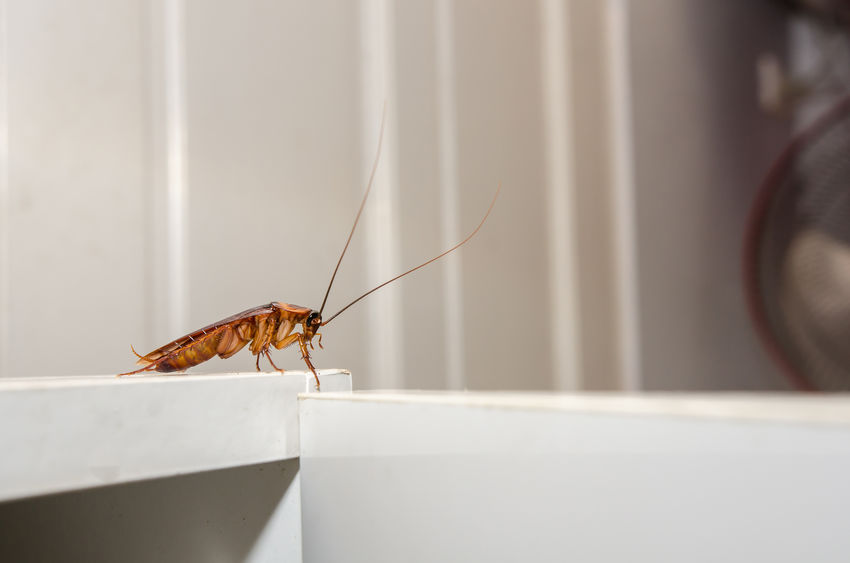
Why Cockroaches Are So Hard To Kill

Cockroaches are one of the most resilient creatures on the planet. They hide in walls, sewers and cupboards. Cockroaches are one of the most hated pests. With such world-renowned hatred, how do they manage to survive? Here’s why they are so hard to get rid of on your own.

The American Cockroach

Over 3,500 species of cockroaches live in the world, but only 30 species have adapted to live around humans. There’s one cockroach you probably know better than you would like: the American cockroach. This species is actually from Africa and it made its way to the US by infesting boats in the 16th century.

The American cockroach is a master survivor. Its genes are associated with chemoreception. That’s how a roach smells and tastes its environment. They are much better at sniffing out food than other insects, with over 154 olfactory receptors for smell! The American cockroach is not a picky eater. They go for things like book bindings, toenails, blood, cardboard and even each other!

Why these pests are so tough

The American cockroach has genes called cytochrome p450s, which help it survive poisonous chemicals. The roach also has a strong immune system that kills harmful fungi and microbes. This makes the most unsanitary environment look like a 5-star resort to the average American cockroach.

Keeping cockroaches away

While cockroaches may be hard to kill, there are a few easy ways to keep them away. Roaches survive in and enjoy unsanitary conditions, so cleanliness is one way to keep them at bay. Store food in airtight containers, remove trash regularly and keep your basement dry. It’s also a good idea to plug holes in your walls and drains. Cockroaches can climb from the sewer to the plumbing in your bathroom sink.

If you already have an infestation, you will need professional help to resolve the problem. For cockroach infestations in the Phoenix area, contact the professionals at CimeX Control. Call us for a free inspection. We build relationships with our clients so they feel free to communicate with us about their unique challenges. We also tailor our plans to each pest problem, making sure we remove critters the first time. Call us at (602) 688-4985 or send us a message at ftorres@cimexcontrol.com.

Posted on

When DIY Pest Control Doesn’t Work

As a homeowner, you can take certain steps to keep pests away from your home. There are DIY methods that sometimes work: keeping food sealed tight in the pantry, using herbs to repel certain bugs, or placing traps. What about situations where pests are out of control? Homeowners have a certain set of tools that only work in some conditions, but professional pest control methods reign supreme. Here are situations where you would need the help of a pest control professional.

Rodent infestations

Rodents can cause structural damage to your home, apartment or office. Mice and rats will gnaw at books, paper, wood and more to build their nests. They will also chew on wiring and defecate inside your home. These are not pests you want living anywhere near your home or office.

Rodents can cause significant damage within a short amount of time, so it’s important to take care of the problem. Pest control professionals have a set of tools to handle rodent infestations. Many DIY rodent control methods involve the use of store-bought traps. These are not pleasant to dispose of, especially if the rodent is still alive. Pest control professionals can take care of this for you.

Cockroach control

Once cockroaches breed in your home, they are difficult to stop. Some DIY methods include setting out a deadly solution for the cockroaches to eat. These solutions later kill the cockroach. This doesn’t always work to solve the overall problem – since you have hundreds living in unseen places and they will not encounter the solution.

CimeX Control Pest Management

Cockroaches can carry deadly diseases, transferring E. coli and salmonella from one food source to the next. No one wants to get sick because of a cockroach infestation. If you know you have a problem, contact a pest control professional as soon as possible.

In addition to rodent and cockroach infestations, there are other pests that are difficult to control on your own. If you have a pest control problem in the Pheonix area, contact the professionals at CimeX Control. Call us for a free inspection. We build relationships with our clients so they feel free to communicate with us about their unique challenges. We also tailor our plans to each pest problem, making sure we remove critters the first time. Call us at (602) 688-4985 or send us a message at ftorres@cimexcontrol.com.

Posted on

How To Keep A Pest-Free Pantry

Pantry Pest Control

“Pantry Pests” is a term for bugs that feed on packaged goods. These pests will infiltrate your pantry and eat your food unless you take steps to keep them at bay. Regular infestations can lead to food waste and cost you money, and the same things that attract pantry pests can also attract mice. A mice infestation can contaminate your food and cause disease. Grossed out by the prospect of pest in your pantry? You should be. Follow these tips and you can keep your pantry pest-free.

Clean your pantry

To get started, take everything out of your pantry and wipe down your shelves. Spilled food like pasta, flour, spices and nuts are targets for pests. Wipe up any spills and go over the shelves with a disinfectant to remove bacteria. If you see mouse droppings, contact a pest control professional for extermination. Mice hide when humans come around, but droppings are a sign they’re in the area.

Inspect items and repackage

Inspect food packages for signs of infestation. Look for evidence of damage like holes or tears. If an item has been contaminated, throw it away. Anything not in a glass or plastic container with a tight-fitting lid can be easily contaminated. Place the items in glass containers instead or store them in your fridge.

Maintaining a pest-free pantry

The best way to keep pests out of the kitchen is to keep food contained and inspect your pantry regularly. Always wipe up spills as soon as you notice them. Keep vulnerable items in the fridge or freezer. If you currently have a pest problem, call a pest control professional for help. Infestations should never be allowed to grow as they can cause costly problems down the road or cause disease.

CimeX Control Pest Management

If you have a pest control problem in the Pheonix area, contact the professionals at CimeX Control. If you’re looking for a pest management team you can trust, call us for a free inspection. We build relationships with our clients so they feel free to communicate with us about their unique challenges. We also tailor our plans to each pest problem, making sure we remove critters the first time. Call us at (602) 688-4985 or send us a message at ftorres@cimexcontrol.com.

Posted on

CimeX Awarded A 2017 Angie’s List Super Service Award

Cimex Control Pest Management is proud to announce that it has earned the home service industry’s coveted Angie’s List Super Service Award (SSA). This award honors service professionals who have maintained exceptional service ratings and reviews on Angie’s List in 2017.

“The service providers that receive our Angie’s List Super Service Award demonstrate the level of excellence that members have come to expect,” said Angie’s List Founder Angie Hicks. “These pros are top-notch and absolutely deserve recognition for the trustworthy and exemplary customer service they exhibited in the past year and overall.”

Angie’s List Super Service Award 2017 winners have met strict eligibility requirements, which include maintaining an “A” rating in overall grade, recent grade and review period grade. The SSA winners must be in good standing with Angie’s List, pass a background check, record a current trade license attestation and abide by Angie’s List operational guidelines.

Service company ratings are updated continually on Angie’s List as new, verified consumer reviews are submitted. Companies are graded on an A through F scale in multiple fields ranging from price to professionalism to punctuality.

For over two decades Angie’s List has been a trusted name for connecting consumers to top-rated service professionals. Angie’s List provides unique tools and support designed to improve the local service experience for both consumers and service professionals.

About CimeX Control:

Our pest control company takes on residential, commercial, and industrial projects in the Phoenix Metropolitan Area. In addition, we offer our services to homeowner associations (HOA). Our team has the skills, experience, and in-depth knowledge of pests needed to create a comprehensive extermination strategy. Throughout the process, we will create detailed reports to keep you up-to-date.
We execute our plans, then follow up on the results. Our team will maintain your property to make sure your pest situation is addressed and under control.

To ensure that you get the best possible pest control service in the area, we never cut corners. We’ve worked with the best vendors and professionals in the industry for decades. In addition, we use modern technology and chemicals to eradicate even the most stubborn pest infestations.